
Property alerts are a must-have tool for real estate agents to keep buyers interested and informed. By sending quick, tailored updates on new listings, price changes, and market trends, agents can build trust and close more deals. Key takeaways:
- 83% of buyers find alerts from agents "very valuable" or "essential", but only 47% of agents use them for all clients.
- Alerts sent within 15 minutes of a listing going live make buyers 3.6x more likely to request a showing.
- Features like price reduction alerts (52% open rate), custom search options, and "Request Showing" buttons drive engagement.
Using tools like CT IDX Pro+, agents can automate alerts, customize them for individual buyers, and track engagement to identify serious leads. Leveraging AI-powered insights for real estate leads helps agents prioritize these high-intent buyers. Adding AI-driven follow-ups like ChatSpark can further boost response rates and streamline scheduling. The result? Better relationships with clients and more closed transactions.
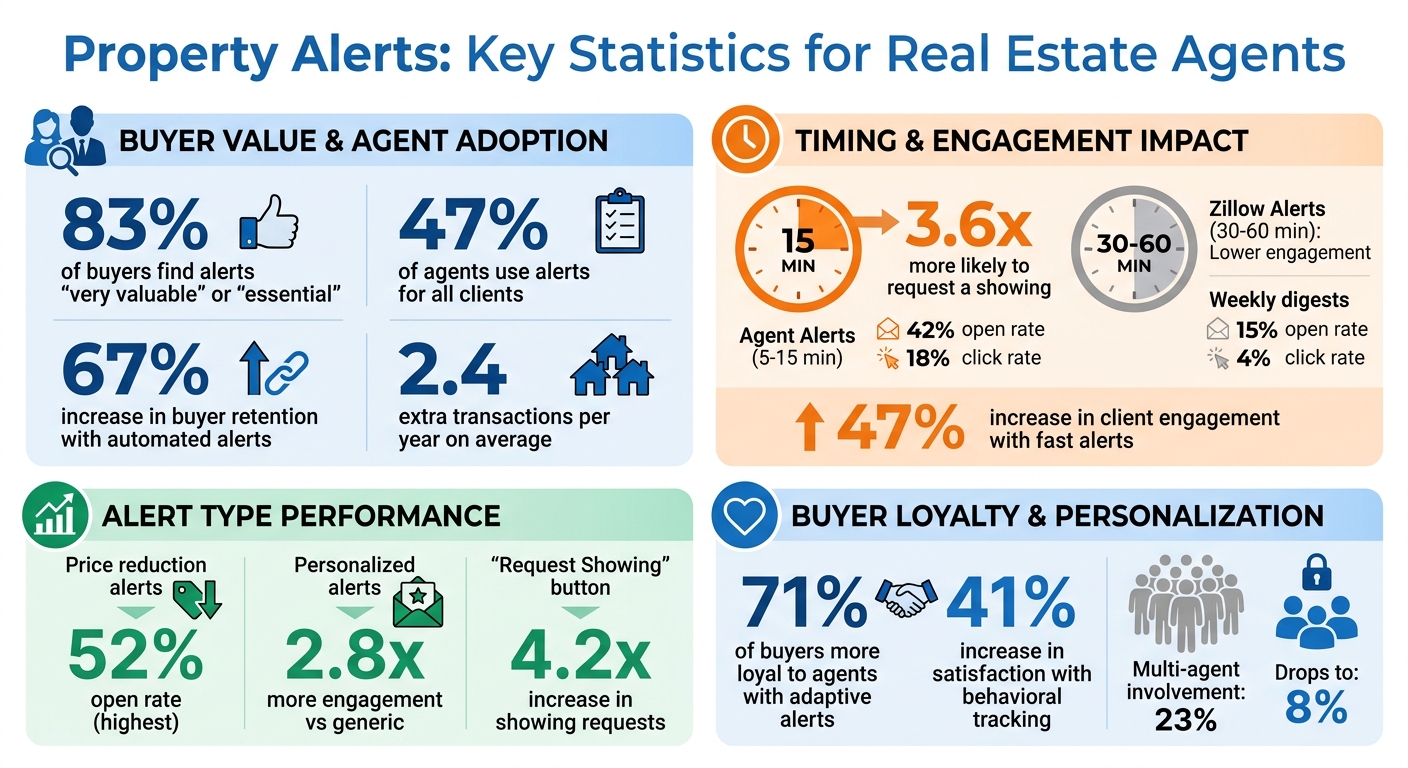
Property Alert Statistics: Engagement Rates and Buyer Behavior Data for Real Estate Agents
What Are Property Alerts and How Do They Work?
Property alerts – also known as listing alerts or e-alerts – are automated updates sent to potential buyers whenever new properties matching their preferences become available on the Multiple Listing Service (MLS) [2]. These notifications are tailored to the buyer’s criteria, such as location, price range, and specific home features.
Here’s how it works: the system continuously monitors MLS updates and compares them to each buyer’s saved preferences. When a new property aligns with those preferences, the system sends out an alert within minutes [2]. Think of it as a virtual assistant that keeps buyers informed and engaged through automated lead nurturing, helping them stay ahead in a competitive market [5].
What Property Alerts Include
Modern property alerts go beyond basic updates, offering a wealth of information to help buyers make informed decisions. These alerts typically include:
- High-quality visuals: Photos, virtual tours, and 3D walkthroughs allow buyers to explore homes before scheduling a visit [1].
- Key property details: Features like garages, pools, or updated kitchens are highlighted based on the buyer’s preferences.
- Location insights: Alerts often include information like school district ratings and estimated commute times [2].
- Status updates: Notifications about price reductions or changes in property status (e.g., "Under Contract" or "Back on Market") keep buyers in the loop [2].
Some platforms take personalization even further by ranking listings based on weighted criteria. For example, they prioritize "must-haves" like a price limit over "nice-to-haves" like a finished basement. Advanced systems also learn from user behavior – tracking which listings a buyer opens, saves, or dismisses – and refine future alerts accordingly [2][6].
Interestingly, price reduction alerts are particularly effective, achieving an impressive 52% open rate. These notifications often prompt immediate engagement, which is crucial in a fast-moving market [2].
How Alerts Reach Buyers
Speed and delivery method play a huge role in the success of property alerts. Buyers need to know about new listings quickly to beat the competition. That’s why most platforms use multi-channel delivery methods, including:
- Email: Ideal for browsing detailed property information.
- SMS: Perfect for highlighting time-sensitive opportunities.
- Push notifications: Delivered through mobile apps for instant updates [2][6].
Timing is everything. Automated alerts from agents often reach buyers within 5–15 minutes of a listing hitting the MLS. In comparison, consumer platforms like Zillow can take 30–60 minutes [2]. This difference matters – a lot. Buyers who receive alerts within 15 minutes are 3.6 times more likely to request a showing, and agents who act quickly see a 47% increase in client engagement [2].
To make things even easier, some alerts include a "Request Showing" button. This simple addition can boost showing requests by 4.2 times compared to requiring buyers to make a separate phone call [2]. Fast, detailed, and actionable – property alerts are designed to give buyers an edge in today’s competitive real estate market.
Benefits of Property Alerts for Buyer Engagement
Property alerts have reshaped the way agents connect with clients, making it easier to build stronger relationships and close more deals. These automated notifications can boost buyer retention by 67% while cutting down multi-agent involvement from 23% to just 8%. This translates to an average of 2.4 extra transactions per year [2]. By delivering timely, personalized updates, property alerts play a key role in keeping buyers engaged.
Providing Timely Market Updates
Speed matters when it comes to keeping buyers interested. The way alerts are delivered can make a big difference. For example, automated alerts sent directly from MLS systems have a 42% open rate and an 18% click rate. Compare that to weekly digests, which only see a 15% open rate and a 4% click rate [2]. When buyers get new listings before they show up on public platforms, they feel like they have an edge, and it positions the agent as their go-to source for market updates.
"The agent who delivers the listing first gets the showing request" – Garrett Mullins, Workflow Specialist at US Tech Automations [2]
Adding a simple feature like a "Request Showing" button in alerts can make a huge difference. It increases showing requests by 4.2 times compared to asking buyers to call separately [2]. This seamless approach captures buyer interest at its peak, making it easier to take the next step.
Building Trust with Personalized Updates
Generic, one-size-fits-all alerts don’t cut it anymore. Buyers can easily tell the difference between impersonal updates and those tailored to their specific preferences. Alerts that prioritize listings based on a buyer’s criteria see 2.8 times more engagement than generic ones [2]. When agents consistently send updates that reflect what a buyer is actively searching for, it shows they’re paying attention.
Modern real estate CRMs take it a step further by analyzing buyer behavior – like which listings they open, save, or dismiss – and adjusting search filters automatically. This type of behavioral tracking increases buyer satisfaction with alerts by 41% [2]. Even more telling, 71% of buyers say they would be far more loyal to an agent whose alerts adapt to their changing preferences [2]. This personalized approach not only builds trust but also helps turn potential leads into serious clients.
Converting More Leads into Clients
Property alerts don’t just keep buyers informed – they also help turn passive leads into active clients. By staying in touch with timely and relevant updates, agents can spark interest and even re-engage leads who might have gone quiet.
Price reduction alerts are especially powerful. These notifications have the highest engagement rates, with a 52% open rate [2]. They often prompt immediate action, turning previously overlooked properties into real options for buyers. For agents, this steady communication keeps them top-of-mind, increasing the chances of turning interest into closed deals.
Setting Up Property Alerts with CT IDX Pro+
CT IDX Pro+ makes it easy to create automated property alerts. With MLS data spanning all 50 states and covering more than 650 MLS markets [7], agents gain access to an extensive range of homes for sale nationwide.
Installing and Configuring CT IDX Pro+
Once you’ve purchased CT IDX Pro+ and completed the necessary MLS paperwork (which typically takes 5-7 business days for approval) while following MLS integration best practices, the Contempo Themes team handles the plugin installation.
To set up email alerts, go to the "Emails" tab in the settings. Here, you can customize your email logo, "From" name, email address, and header/footer text to align with your branding. For SMS alerts, enable them in the Integrations tab and input your Twilio credentials, including the Account SID, Auth Token, and From Number. After installation, visit Settings > Permalinks and click "Save Changes" to ensure smooth loading of all IDX pages.
Property alerts are triggered when a registered user saves a search. Users can manage their saved searches and alert preferences on the /my/saved-searches page. To encourage account creation, enable the "Forced Registration" feature, which prompts users to sign up after viewing a certain number of listings.
Once the plugin is fully configured, you can fine-tune alerts to match each buyer’s preferences.
Customizing Alerts for Individual Buyers
CT IDX Pro+ automatically tailors alerts to match each buyer’s saved search criteria. When users save a search, the system captures their preferences, including location (by zip code, city, or custom map areas), price range, bedrooms, bathrooms, and specific property features like pools. The "Draw to Search" tool allows buyers to define custom map boundaries, making alerts even more precise.
For added convenience, you can create custom search links for buyers. Simply perform a search on the front end with the desired filters, then copy and share the resulting URL. This "Find a Home" link method is a quick way to set up detailed alerts. Taking time to enhance your email templates with polished visuals and branding elements can increase buyer inquiries by over 30% [8].
This streamlined setup not only simplifies your workflow but also boosts buyer engagement and helps convert leads more effectively.
Tracking Engagement and Improving Lead Nurturing
Measuring Alert Performance with Analytics
Understanding how buyers interact with property alerts can help you fine-tune your follow-up strategy. With CT IDX Pro+, you get built-in analytics that track key metrics like open rates and click-through rates. These insights show you which buyers are actively searching and which ones might need a little extra attention.
Speed is everything. Buyers who receive listing alerts within 15 minutes are 3.6 times more likely to request a showing compared to those who get them after an hour [2]. This quick delivery is why direct MLS agent alerts perform so well, boasting a 42% open rate and an 18% click rate [2].
To stay on top of your leads, enable the "BCC Me on Listing Alerts" feature in your settings. This allows you to see exactly what your buyers see, so your follow-ups can be more personalized and meaningful rather than generic [3]. For example, if you notice a buyer viewing the same property three or more times, it’s a clear sign of interest – perfect for a timely phone call [2][4]. On the other hand, if a buyer’s alert open rate drops over two weeks, it might be time to check in and adjust their search criteria [2].
These tools and insights make it easier to automate follow-ups and ensure no lead is left behind.
Automating Follow-Ups with ChatSpark
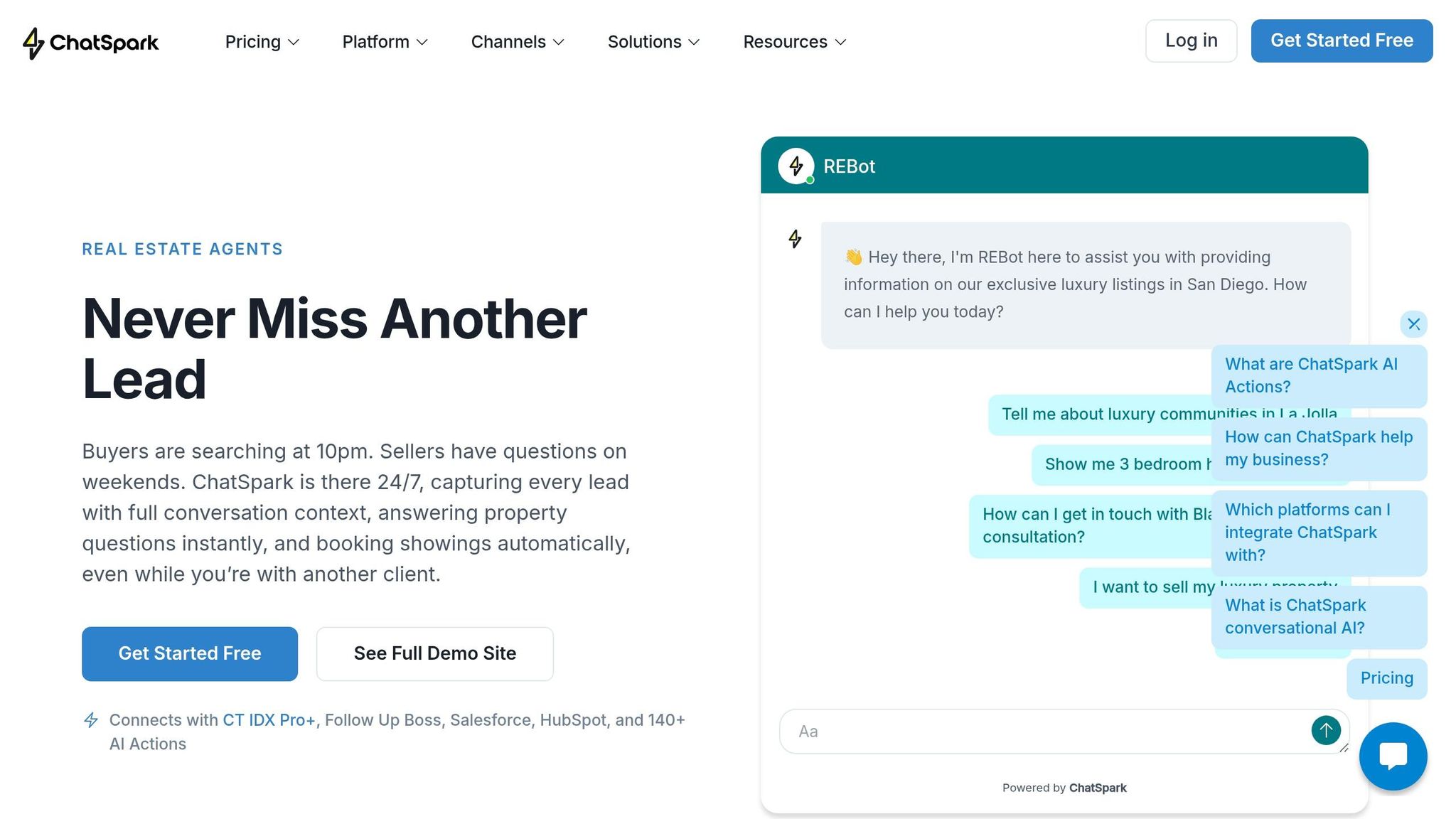
ChatSpark’s conversational AI takes follow-ups to the next level by handling buyer interactions after they engage with property alerts. This AI chatbot works 24/7 across your website, social media, and messaging platforms. It can answer questions about listings, provide additional property details, and even schedule showings directly into your calendar.
Here’s how automation can make a difference: In early 2025, the Thompson Team in Seattle combined automated alerts with AI-driven follow-ups. The result? A 327% increase in listing appointments within just 90 days, largely by tracking when homeowners repeatedly checked their property equity [4]. Similarly, Jason Wright of Coldwell Banker used automated engagement tracking to identify high-interest signals across nearly 700 contacts. Within 48 hours, he secured a listing appointment for a $3 million property [4].
Conclusion
In today’s fast-moving real estate market, property alerts aren’t just helpful – they’re crucial. Buyers who receive listing alerts within 15 minutes are an astounding 3.6 times more likely to request a showing. On top of that, automated alert systems have been shown to boost buyer retention by 67%[2]. Timely alerts not only keep buyers informed but also position you as a trusted resource, delivering the latest updates exactly when they need them.
Tools like CT IDX Pro+ make this process seamless with hourly MLS updates, customized search options, and built-in analytics to identify serious buyers. Meanwhile, ChatSpark’s 24/7 conversational AI ensures instant responses and automated scheduling, so you never miss a high-intent lead.
The real secret? Consistency. Regularly sending alerts, syncing delivery frequency with buyer interest, and reviewing your settings every 60–90 days can keep your approach sharp. Pay attention to engagement metrics, such as open rates or repeated property views, as these can signal when it’s time for personalized outreach. By combining timely alerts with tailored service, you can build trust, strengthen relationships, and turn more leads into successful closings.
FAQs
What should I include in a property alert to get more showing requests?
To get more showing requests, focus on sending timely, tailored updates that align with what buyers are looking for – think location, budget, property type, and must-have features. Speed is key here: aim to send alerts within minutes of a new listing hitting the market. Add a personal touch by referencing previous conversations or saved preferences. And don’t forget to strike the right balance – send updates often enough to keep buyers interested but not so frequently that it feels overwhelming.
How often should I send alerts without overwhelming buyers?
When it comes to keeping buyers interested, timing is everything. Sending property alerts quickly – ideally within 15 minutes of MLS updates – can make a big difference in engagement. But it’s not just about speed; giving buyers control over how often they receive alerts is just as important. Let them choose options like real-time, daily, or weekly updates based on what works best for them. This way, the alerts stay relevant and useful without overwhelming them with too many notifications.
Which engagement metrics best signal a serious buyer?
When it comes to spotting serious buyers, certain engagement metrics can be incredibly telling. For instance, buyers who respond quickly to listing alerts – sometimes requesting a showing within minutes – are often highly motivated. Another key behavior is consistent interaction with automated alerts, which signals ongoing interest.
These actions don’t just reflect commitment; they also have a measurable impact. Engaged buyers are 67% more likely to stick around, and the chances of them working with multiple agents drop significantly – from 23% to just 8%. It’s clear that these behaviors are strong indicators of both interest and loyalty.


