
Want to close more deals in 2025? Here’s the secret: A streamlined digital tool stack can save time, keep you organized, and help you deliver better client experiences. With 97% of homebuyers searching online and 87% of lost deals due to missed follow-ups, adopting the right tools isn’t optional – it’s essential.
Key Tools You Need:
- SEO Tools: Attract local traffic with Rank Math
- AI Chatbots: Use ChatSpark for 24/7 lead capture, qualification, and instant client support.
- IDX Integration: Ensure accurate, up-to-date MLS property listings with CT IDX Pro+.
- Marketing Automation: Combine Elementor Pro for landing pages with Follow Up Boss and Zapier for lead management.
- Performance Tracking: Use Google Analytics 4, Analytify, and Meta Ads Manager to monitor campaigns and website engagement.
Why It Matters:
- Save Time: Automate repetitive tasks like follow-ups and lead qualification.
- Boost Visibility: Rank higher on Google with SEO and integrated MLS listings.
- Engage Clients: Keep prospects engaged with chatbots and personalized landing pages.
- Increase ROI: Track ad performance and optimize campaigns with actionable data.
By integrating these tools, you’ll turn your real estate website into a lead-generating machine while focusing on what truly matters – closing deals.
9 Best Tools for Real Estate Agents 2025 (Lead Generation, Marketing, CRM & More)
SEO and Analytics: Improve Local Search Rankings and Track Results
Laying a strong groundwork in SEO and analytics sets your website up for success, especially when paired with advanced lead generation and automation tools we’ll discuss later. For real estate professionals, standing out in local search results is a game-changer. Here’s why: 46% of all Google searches are for local information. The first business listed in local search results grabs a whopping 54.16% of all clicks, while the second gets just 6.88%. Plus, 88% of mobile users who search for local businesses either call or visit within 24 hours [2].
By establishing a solid SEO and analytics strategy, your website transforms into a lead-generating powerhouse. Let’s break down the tools that can help you dominate local search rankings.
Website Optimization with Rank Math
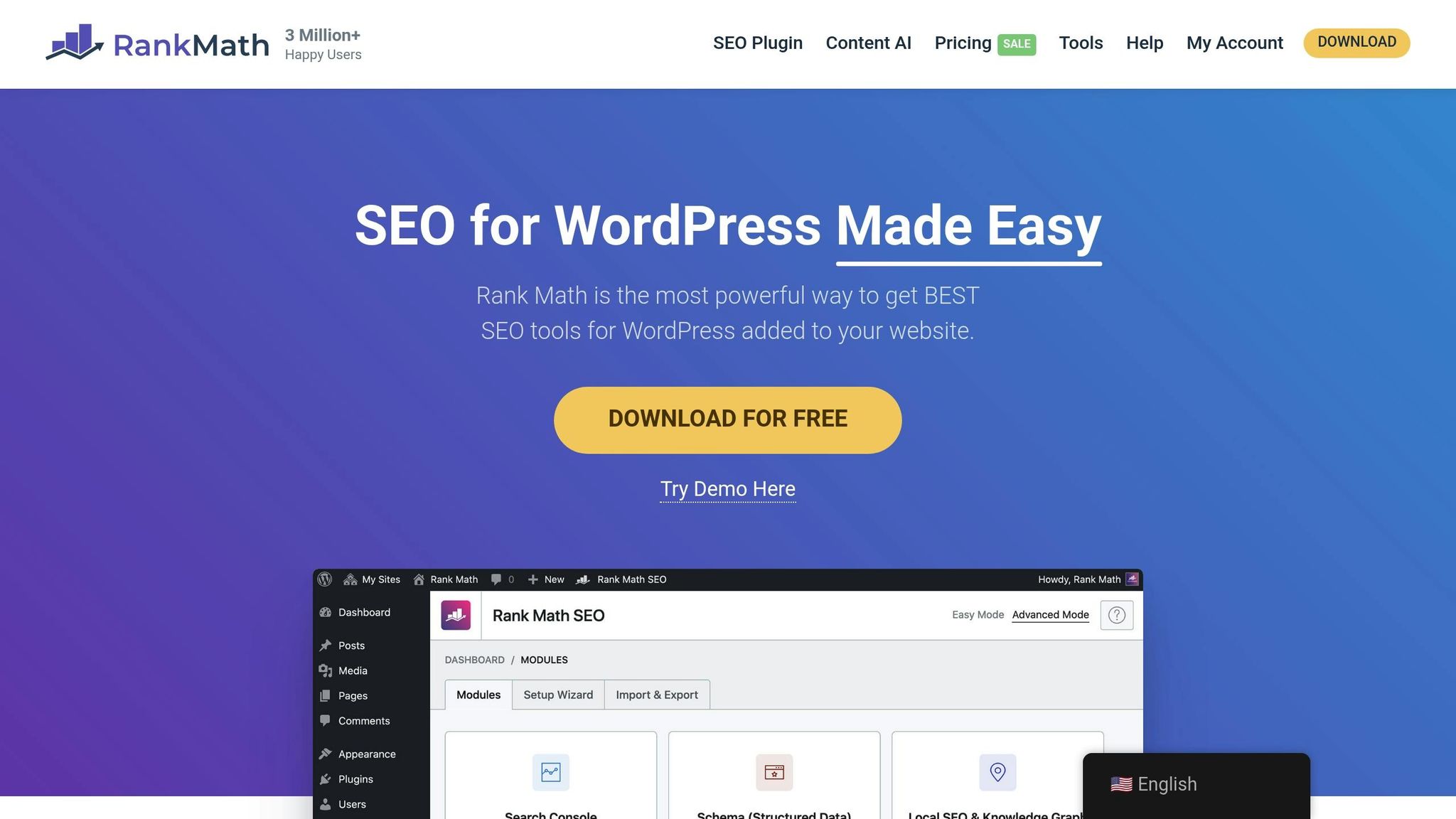
Rank Math is widely regarded as one of the top SEO plugins for WordPress [4]. Its Local SEO module is particularly useful for real estate professionals, as it equips your site with the metadata Google needs to identify it as a local business [1].
"Rank Math is seriously THE BEST SEO plugin that I ever installed and tried out in my 6 years of Blogging! It is hands-down one of the most mind-blowing, helpful & FREE SEO WordPress plugins." – Ryan Robinson [3]
This plugin is perfect for agents targeting multiple locations, as it efficiently manages location-specific SEO [1]. By verifying your Google Business Profile, Rank Math can add Knowledge Graph code to align your metadata with your official business details [1]. Key steps include optimizing your homepage for your primary service area, creating individual landing pages for each location you serve, and ensuring your business information in Rank Math matches your official details [2]. The plugin even provides a shortcode for consistent display of your contact information across your site [1]. With its clean code and fast loading speeds [3], Rank Math ensures your SEO enhancements won’t compromise your site’s performance.
While Rank Math takes care of your overall SEO, CT IDX Pro+ ensures your property listings shine.
MLS Listings SEO with CT IDX Pro+
Traditional IDX solutions often fall short when it comes to SEO because they rely on iframes or subdomains, which search engines struggle to index. CT IDX Pro+ fixes this by creating fully crawlable and indexable listing pages, consolidating SEO authority on your main domain.
| Feature | CT IDX Pro+ | iFrame-Based IDX | Subdomain-Based IDX |
|---|---|---|---|
| Crawlability | ✅ Fully indexable | ❌ Not indexed | ❌ Indexed separately |
| SEO Authority | ✅ Consolidated | ⚠️ Limited | ❌ Split authority |
| Unique Property Links | ✅ Yes | ❌ No | ❌ Limited |
CT IDX Pro+ covers over 650 MLS markets across all 50 states and updates listings multiple times daily via a fast API. It generates search engine–friendly listing pages that improve visibility and rankings, driving more traffic and leads. Seamless WordPress integration ensures the listings match your site’s design and branding, while every property gets a unique, SEO-friendly URL that’s easy for search engines to index.
Performance Tracking with Google Analytics 4 and Analytify
Google Analytics 4 (GA4) is essential for understanding how visitors interact with your site. It tracks key actions like clicks, scrolls, and form submissions, using an event-driven model that improves data accuracy and respects user privacy. With AI and machine learning, GA4 can even provide predictions when data is limited [7].
For easier access to this data, Analytify integrates GA4 metrics directly into your WordPress dashboard, making it simple to monitor performance and plan campaigns [5]. You can define key lead actions, set up GA4 conversion tracking, and use Enhanced Measurement to capture user interactions [5]. Analytify’s add-ons track form submissions, file downloads, and landing page traffic – critical for generating real estate leads.
GA4 also allows you to build custom audiences and analyze user journeys from their first visit to conversion [5]. Use its Exploration reports to dig deeper into metrics that matter, focusing on the interactions that drive engagement and conversions [6]. Regularly reviewing and fine-tuning your tracking setup ensures you’re always measuring the most important data as your business grows [5].
AI Chatbots for Lead Capture and Customer Support
SEO might bring visitors to your site, but what happens when they have questions? That’s where AI chatbots step in. They’re available 24/7 to answer inquiries, engage with potential clients, qualify leads, and even schedule appointments – all without missing a beat.
In real estate, timing is everything. A quick, helpful response can be the difference between gaining a lead or losing one. AI chatbots deliver instant, intelligent replies, keeping prospects engaged and guiding them seamlessly through your sales funnel. Let’s take a closer look at how ChatSpark makes this happen.
24/7 Support with ChatSpark
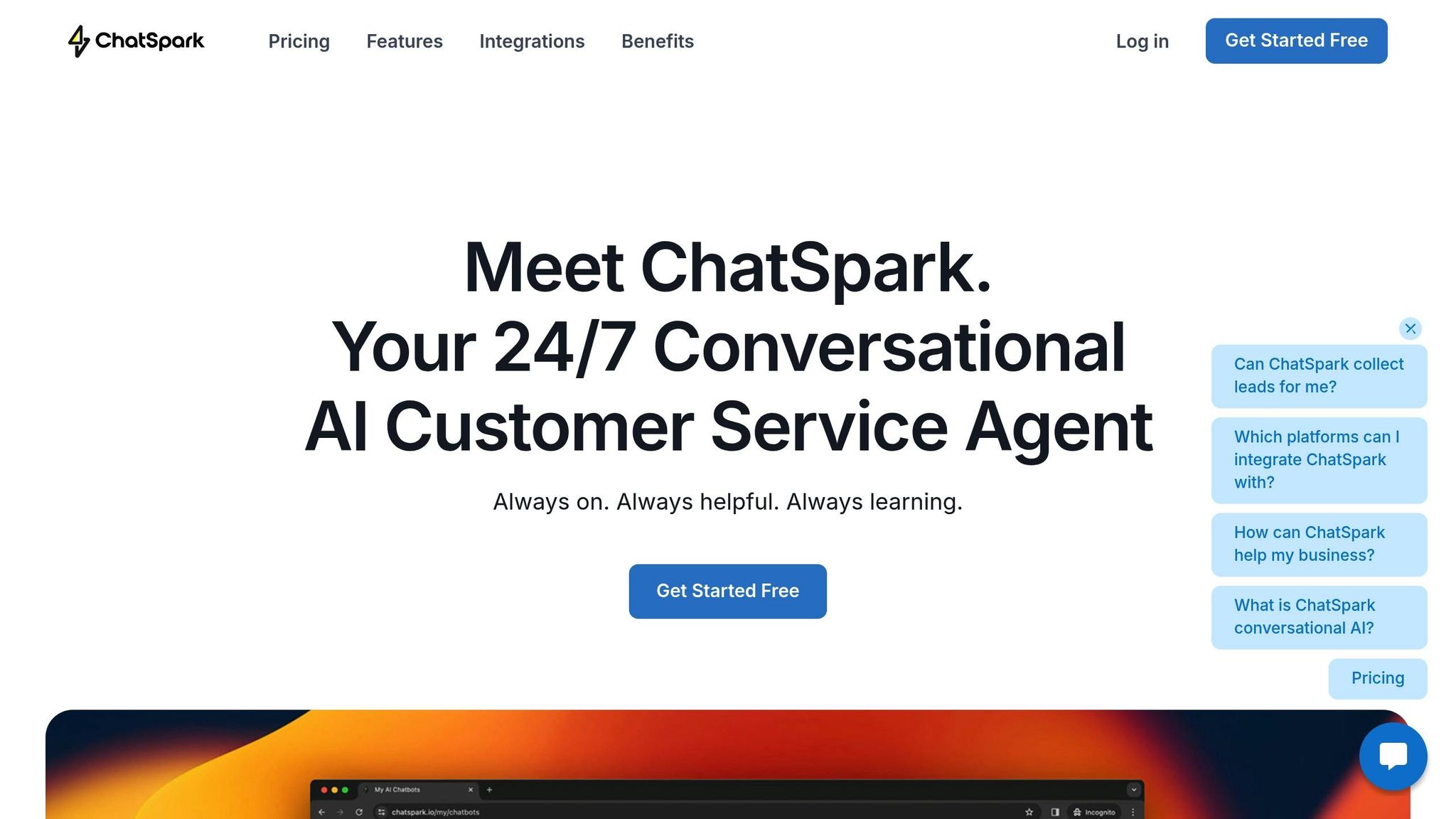
ChatSpark is your around-the-clock lead-capture assistant. This conversational AI tool works across multiple platforms – websites, Instagram, Facebook, WhatsApp, Telegram, and Slack – and supports over 85 languages. It can handle up to 80% of inquiries instantly [8], answering questions about property details, neighborhood insights, or scheduling requests without delay.
The chatbot doesn’t just answer questions; it helps you qualify prospects by asking targeted questions like, “What’s your budget range?” or “When do you plan to move?” This ensures your time is spent on leads most likely to convert. Plus, ChatSpark integrates with booking tools like Square and Calendly [8], so clients can schedule property tours or consultations directly through the chat.
You can even customize the chatbot’s tone and personality to align with your brand. With training based on your data sources, ChatSpark delivers personalized, accurate responses tailored to your audience [9].
Adding Chatbots to Landing Pages
ChatSpark goes beyond just answering questions – it enhances engagement on specific landing pages. For example, on a property listing page, the chatbot can prompt visitors to schedule a viewing. These tailored interactions make lead capture feel natural, not pushy.
ChatSpark ensures that your landing pages are optimized for immediate engagement. Additionally, it connects with over 5,000 apps via Zapier [10], automatically syncing captured contact details with your CRM or email marketing platform. This seamless process ensures quick follow-ups and better lead management. Plus, detailed analytics help you fine-tune chatbot interactions and improve your marketing efforts over time.
ChatSpark’s pricing is flexible, starting at $19/month for basic features and going up to $129/month for advanced integrations [9], making it a scalable solution for real estate professionals of all sizes.
IDX Integration for MLS Data and Better User Experience
A well-optimized website loses its edge if the property listings are outdated. That’s where IDX (Internet Data Exchange) integration comes into play. By integrating IDX, you can display up-to-date MLS (Multiple Listing Service) property listings directly on your site. This not only ensures compliance with MLS regulations but also delivers the accurate, real-time data that visitors expect. With this setup, your site doesn’t just attract traffic – it keeps users engaged with fresh, relevant listings.
With over 90% of homebuyers starting their search online [13], having searchable, current listings is no longer optional – it’s essential. Websites that combine IDX with advanced search tools can achieve up to three times higher engagement rates compared to those without these features [13]. It’s not just about showcasing properties; it’s about creating a smooth, user-friendly experience that encourages visitors to stay on your site and convert into leads.
Complete MLS Coverage with CT IDX Pro+
CT IDX Pro+ provides access to MLS data from over 650 U.S. markets [11], making it possible to showcase listings from nearly any region. This is especially useful for clients relocating across states or searching in multiple locations.
Listings are refreshed several times a day, ensuring that the information on your site is always accurate and up-to-date [11]. Whether it’s a price adjustment or a status change, your website reflects these updates automatically. This level of reliability builds trust with your audience and helps maintain compliance with MLS boards.
CT IDX Pro+ is also designed to meet strict MLS compliance standards [11]. It automatically ensures that listing data is accurate, current, and properly attributed to the listing broker or agent. This automation reduces the risk of violations and helps you avoid potential penalties, giving you peace of mind while focusing on your clients.
Search-Friendly Listings and Property Search Tools
In addition to comprehensive MLS coverage, CT IDX Pro+ enhances user engagement by simplifying the property search process. It creates SEO-friendly listing pages with structured data and schema markup, boosting your chances of appearing in local search results [11]. This means more organic traffic flowing to your site.
The platform also includes API-powered search widgets that can be embedded anywhere on your website – whether it’s a landing page, blog post, or neighborhood-specific page [11]. These tools let visitors search properties based on criteria like price, number of bedrooms, or location, offering a seamless and interactive experience.
For agents, these features translate into better engagement, longer time spent on the site, and more lead generation opportunities. When users can quickly and easily find what they’re looking for, they’re more likely to submit inquiries or schedule showings. Plus, the platform’s responsive design ensures that listings look great and function smoothly on both desktop and mobile devices – a must, given the growing dominance of mobile searches in real estate.
You can further enhance engagement by creating dedicated neighborhood pages. These pages feature live MLS listings, interactive search filters, and built-in lead capture forms. Visitors searching for homes in a specific area can see real-time listings and instantly request more information or schedule a showing. When paired with your SEO and chatbot strategies, these IDX tools turn your website into an interactive lead-generating powerhouse. Leads captured through these tools can even be synced automatically to your CRM, such as Follow Up Boss, using integrations like Zapier [11][12].
This integrated approach transforms your website from a static collection of listings into a dynamic, always-on lead generation engine. It provides the current, searchable property data that buyers expect while ensuring you remain compliant with MLS requirements.
Landing Pages and Marketing Automation Tools
Turn visitors into leads with high-performing landing pages paired with automation tools. In real estate marketing, these elements are essential for capturing and nurturing leads effectively. When combined with tools like IDX and chatbots, landing pages complete a streamlined, data-driven marketing system.
IDX integration helps attract visitors to your site with updated listings, but landing pages and automation tools ensure those visitors turn into leads. Together, they create a smooth journey from the first interaction to the final follow-up, making the most of your marketing budget. These tools work hand-in-hand to guide prospects seamlessly through the process, from engagement to lead capture.
Landing Page Creation with Elementor Pro
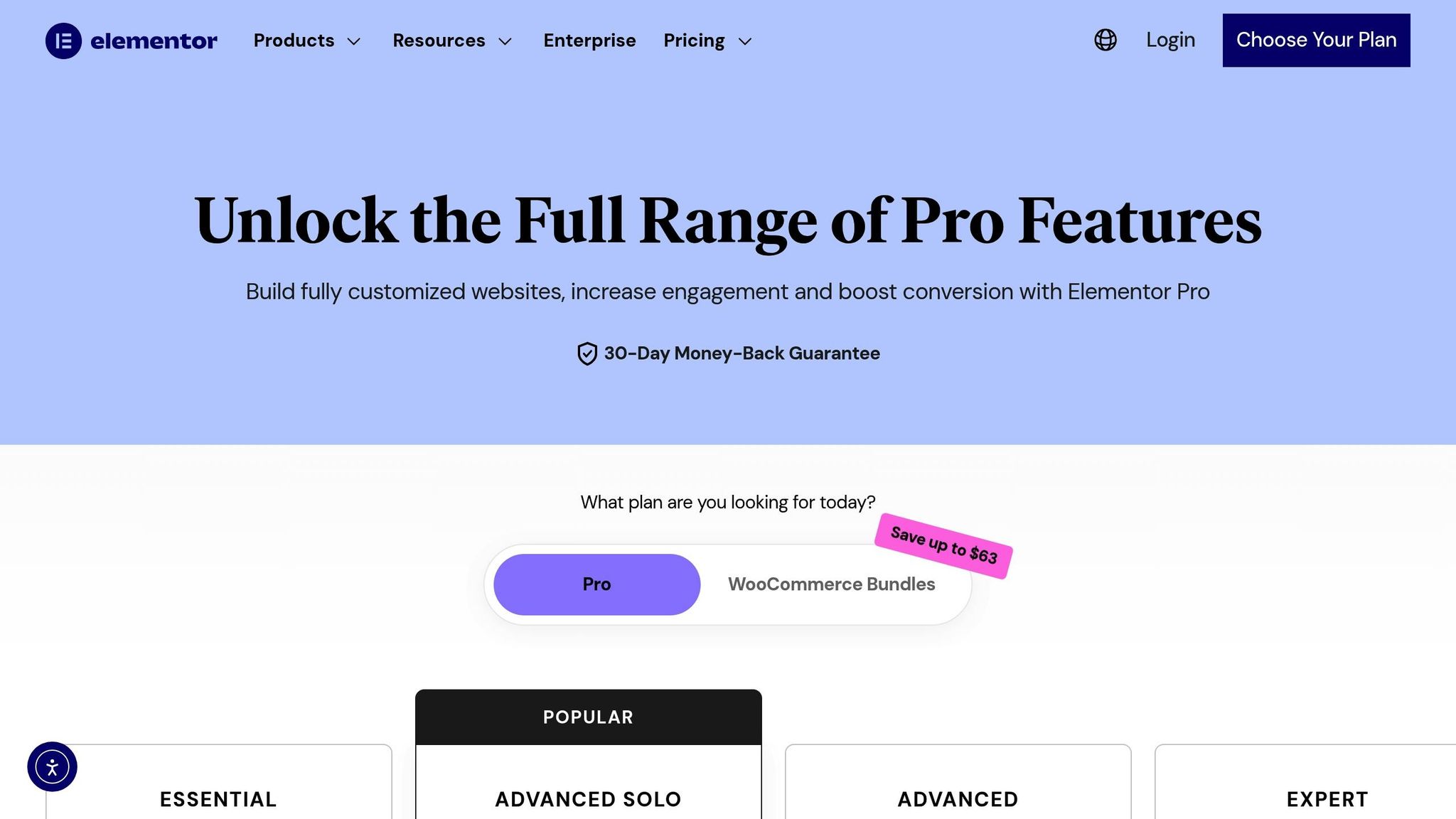
Elementor Pro simplifies the process of creating landing pages with its drag-and-drop interface, making it easy to design professional, high-converting pages. Before diving into the design, it’s important to define your goals, audience, and message clearly.
Effective real estate landing pages share a few key features: a compelling headline, an eye-catching hero section, and a strong call-to-action (CTA). For instance, a phrase like "Schedule Your Tour Today" is clear and action-oriented. Instead of just listing features, focus on benefits that resonate with clients, such as faster sales or better buying opportunities.
Elementor Pro’s Form and Countdown widgets make lead capture simple and add urgency for limited-time offers like exclusive previews or market reports. Adding social proof – such as testimonials, recent sales, or trust badges – helps build credibility. And don’t overlook mobile responsiveness; ensure layouts and font sizes adapt perfectly for smartphones and tablets. The best landing pages are focused, with clean designs, persuasive copy, and short, user-friendly forms that integrate seamlessly with your site optimization efforts.
Content Creation with Canva, InVideo, and Lumen5
Engaging visuals are a must for driving interaction, and platforms like Canva, InVideo, and Lumen5 excel at turning real estate content into eye-catching visuals.
Canva is particularly useful for maintaining brand consistency across marketing materials. Its AI tools streamline content creation while keeping everything on-brand. For example, First National Real Estate expanded their template library from 400 to over 2,100 branded templates using Canva, saving over 156 hours annually in design work. Similarly, PeakMade reported $10,000 in agency savings, a 99% reduction in property onboarding time, and $130,000 in yearly cost savings [16].
"From automated workflows to on-brand templates and AI technology, we’re empowering real estate agents with streamlined, accessible design tools that free them up to focus on their core expertise: selling property."
- Canva Team [16]
InVideo offers an intuitive platform for creating videos, complete with a vast stock footage library and customizable templates. With tweets featuring videos generating 10 times more engagement and 90% of businesses increasing brand visibility on social media, video content is essential [17]. InVideo’s free tier allows up to 60 watermarked video exports per month, with premium plans starting at $15 monthly.
Lumen5 uses AI to transform written content – like blog posts or listing descriptions – into engaging videos. This is particularly handy for repurposing market analyses or neighborhood guides into shareable visual stories.
"The AI aspect of Lumen5 was a big draw for us, allowing the platform to be truly plug-and-play with images and media, especially with branded materials and templates."
- Robert Schaub, Marketing Program Manager [18]
Lead Management with Follow Up Boss and Zapier
Once your landing pages and content start generating leads, managing them efficiently becomes crucial. Follow Up Boss serves as a central hub for all your leads, while Zapier connects your various lead sources – like website forms, chatbots, and PPC campaigns – into one streamlined system.
Without automation, manually transferring lead data, sending follow-ups, and updating systems can be overwhelming. As freelance writer Daniel Kenitz noted in December 2024, Zapier can turn this chaos into a self-running, organized pipeline.
"Think of it like having a clone of yourself handling all those repetitive tasks while you focus on what really matters: building relationships and closing deals."
- Daniel Kenitz, Freelance Writer [15]
Zapier can automatically add contacts to Follow Up Boss without triggering immediate email notifications, giving you control over your follow-up timing. It also integrates with email marketing tools, ensuring new leads are added to your newsletter lists for ongoing engagement. Many agents back up lead data by exporting it to Google Sheets or Google Contacts. Additionally, Follow Up Boss can trigger Slack notifications when hot prospects enter the system. For platforms without direct integration, Zapier’s Webhooks feature acts as a flexible connector.
"Zapier helps real estate agents do their most important work by saving time through automation. Discover new ways to streamline your work, increase productivity, and close more deals."
- Follow Up Boss [14]
Ad Performance Tracking and Website Hosting
Keeping tabs on your ad campaigns and ensuring your website runs smoothly go hand in hand when it comes to getting the most out of your marketing efforts. If you’re not tracking your ads effectively, you could be wasting money on strategies that don’t work. And if your website is slow, you’re likely losing potential leads before they even get a chance to explore your listings.
Ad Tracking with Meta Ads Manager and UTM Tags
Meta Ads Manager is a powerful tool for monitoring how your Facebook and Instagram ads are performing. Combine it with UTM tags to pinpoint which campaigns are driving the best leads. Together, they help you allocate your ad spend wisely and improve your conversion rates.
Key Metrics to Watch
- CTR (Click-Through Rate): Shows how appealing your ad is to viewers.
- CPL (Cost Per Lead): Tells you how much you’re paying for each lead.
- Conversion Rate: Tracks the percentage of leads that take action, like filling out a form or making a purchase.
- ROAS (Return on Ad Spend): Measures how much revenue you’re earning for every ad dollar spent.
How to Use UTM Parameters
UTM tags are snippets you add to your URLs to track where your traffic is coming from and how users interact with your campaigns. Here’s a quick breakdown:
| Parameter | Example Value | Purpose |
|---|---|---|
| source | Identifies the traffic source (e.g., Facebook). | |
| medium | cpc | Specifies the marketing method, like cost-per-click. |
| campaign | spring-listings | Names the campaign for tracking purposes. |
| content | carousel-ad | Differentiates between ad types or creatives. |
Starting January 1, 2024, Meta will automatically add URL parameters to ad traffic, including Campaign Source, Campaign Medium, Ad ID, Campaign ID, Adset ID, and Campaign Tracking Group ID [19]. This automation simplifies tracking, but you can still customize parameters for more granular insights.
Dynamic URL parameters can also populate values automatically based on your ad setup. To add these in Ads Manager, go to the Ad level and use the "Build a URL Parameter" option under "Website URL" or in the "Tracking" section [19].
For instance, if you’re running separate campaigns targeting luxury home buyers and first-time buyers, you can use distinct campaign names in your UTM tags. This way, you’ll know which audience responds better, allowing you to adjust your budget accordingly.
Next, let’s look at how Cloudways hosting ensures your website can handle the traffic your ads generate.
High-Performance Hosting with Cloudways
While tracking ads is important, your website’s performance is just as critical. A fast-loading site not only improves user experience but also boosts your rankings on search engines. Cloudways offers hosting solutions designed to keep real estate websites running efficiently, even during traffic surges like open house announcements or major market updates.
Real estate websites often experience spikes in traffic during peak buying seasons or when new listings go live. Cloudways is built to handle these fluctuations seamlessly [20].
Tips for Optimizing Website Performance
To ensure your site is always at its best, consider these optimization strategies:
- Use a CDN (Content Delivery Network) to speed up content delivery.
- Minify images and code to reduce load times.
- Enable browser caching and limit HTTP requests.
- Aim for high uptime – 99.9% or better – so your site is always accessible [21].
Here’s a real-world example: In March 2023, Real Estate Wire (REW), a Canadian real estate marketplace, used imgix for dynamic image resizing and compression. This cut their image processing time by 96%, reduced costs by 70%, and allowed their engineering team to focus on their core product [20].
To track and analyze your website’s performance, tools like Google Analytics are essential [22]. With GA4, you can dive into user behavior and conversions, helping you fine-tune your marketing funnel. When ad tracking and hosting performance work together, you maximize your chances of turning visitors into leads.
Cloud hosting offers the scalability and flexibility you need for websites that experience traffic fluctuations [21]. For WordPress-based real estate sites, managed WordPress hosting provides tailored solutions for better performance and enhanced security [21]. Investing in quality hosting translates into a better user experience and improved search engine visibility, making it well worth the cost.
Complete Workflow: Using All Tools Together
Bring together essential digital tools to streamline your real estate processes for 2025.
Step 1: Build the Foundation with SEO and MLS Integration
Start by setting up Rank Math on your WordPress site and configuring CT IDX Pro+ for seamless MLS data integration. Use local keywords strategically in titles, descriptions, and meta tags to boost your visibility [24]. Considering that 64.5% of internet users click on the top three search results [23], a solid SEO setup is critical for standing out.
Make sure your listings load quickly and are mobile-friendly. CT IDX Pro+ creates listing pages that are optimized for search engines, ensuring they’re easy to crawl and index. This gives you an edge in local search rankings.
Once your SEO and MLS setup is complete, shift your attention to capturing and automating leads.
Step 2: Integrate Lead Capture Tools
Add ChatSpark to your website and landing pages built with Elementor Pro. Program ChatSpark to ask qualifying questions that help identify serious leads.
Real Estate 7 began integrating the Follow Up Boss Pixel into client websites —enabling seamless tracking of user activity and form submissions. This integration automatically syncs lead data with Follow Up Boss, giving agents instant access to campaign sources, viewed listings, and detailed engagement histories. For streamlined lead management and powerful insights, incorporating Follow Up Boss is a smart move. [25].
Step 3: Automate with Zapier
Use Zapier to connect Elementor Pro Forms to Follow Up Boss, seamlessly transferring lead data into your CRM [25]. This automation removes the need for manual data entry and ensures follow-ups happen automatically.
Set up tailored email sequences for different types of leads. For instance, first-time buyers might receive educational resources about the buying process, while luxury home prospects could get exclusive market reports or premium listings.
Step 4: Create and Share Content
Develop dedicated landing pages for your listings and repurpose this content into social media posts using tools like Canva or InVideo. Make sure every piece of content includes a clear call-to-action (CTA) that directs users to your chatbot-enabled pages.
Step 5: Launch and Track Ad Campaigns
Run Facebook and Instagram ads through Meta Ads Manager, ensuring you include UTM parameters for better tracking. Monitor key metrics like cost per lead (CPL), click-through rates (CTR), and return on ad spend (ROAS). Use Google Analytics 4 (GA4) to track user behavior on your site after they click an ad, offering deeper insights than Facebook’s native analytics [26].
Once your campaigns are live, keep an eye on performance and adjust your strategy as needed.
Step 6: Monitor and Optimize Performance
Track your website’s performance with GA4 alongside Analytify. Create custom reports to analyze traffic from ads and measure conversions that align with your goals. For example, in April 2025, Ruler Analytics helped companies consolidate data for a clearer picture of marketing ROI. By mapping the customer journey across multiple touchpoints, Ruler Analytics enables smarter decisions about where to allocate your budget [27].
Daily Workflow Example
In a fully integrated system, your day might include automated lead capture, real-time performance reviews, and quick campaign tweaks. Start by checking Follow Up Boss for new leads from ChatSpark and assessing their quality. Then, use GA4 to see which listings are driving traffic. Review ad performance in Meta Ads Manager, and if CPL for luxury listings exceeds $50, adjust your targeting immediately.
The Benefits of Integration
When all these tools work together, you create a seamless journey for potential clients. Imagine this: a prospect sees your Facebook ad, clicks through to a listing page, chats with your bot, schedules a showing, and receives automated follow-up emails – all without you lifting a finger. This kind of streamlined system ensures you connect with leads at every stage while maintaining consistent communication. Meanwhile, you’re free to focus on high-impact tasks like showings and closing deals.
Conclusion: Building a Data-Driven Real Estate Business in 2025
The real estate industry is evolving far beyond simply adopting new technology. Today, data analytics and AI have become essential tools for staying competitive and achieving growth.
"From enhancing property valuations to improving customer insights and operational efficiency, data-driven approaches are providing a competitive advantage to those who embrace them." – Solomon Partners [28]
The numbers back this up. By 2023, PropTech investments hit approximately $630 million [29]. This surge reflects the growing reliance on technology and data to reshape the real estate landscape.
To thrive in this environment, having the right tools is crucial. Tools like Rank Math, CT IDX Pro+, ChatSpark, Elementor Pro, Follow Up Boss, and Cloudways equip real estate professionals to seize opportunities in a data-driven marketplace. For instance, a mid-sized property management firm used predictive analytics to identify high-growth areas, leading to a noticeable revenue boost [30].
This integrated tool stack revolutionizes real estate operations. From automating lead tracking to leveraging real-time data, every interaction becomes a chance to make smarter decisions. Chatbots work around the clock to capture leads, CRMs automatically segment prospects, and analytics dashboards highlight the listings with the best return on investment.
That said, challenges remain. Over 60% of real estate professionals report difficulties integrating new systems into their existing workflows. However, those who overcome these obstacles gain a clear edge. For example, in 2024, Appinventiv’s Ility platform helped businesses modernize their technology infrastructure, resulting in a 40% boost in occupancy rates and a 2% increase in ROI [29]. Meanwhile, the demand for generative AI skills surged by 64% in 2022 and continued climbing by 58% through August 2023, with the AI market expected to hit $1,047 million by 2032, growing at an annual rate of 11.52% [29].
This robust tool stack delivers automated lead qualification, improved search rankings, streamlined communication, and data-driven decision-making. By embracing automation and insights from data, real estate professionals can boost commissions while delivering a better experience for their clients.
FAQs
How can AI chatbots like ChatSpark help real estate agents boost lead conversions?
AI chatbots, such as ChatSpark, offer a game-changing way to boost lead conversions. With features like 24/7 multilingual support, these bots can engage potential clients instantly, answer their questions, and even qualify leads on the spot. By gathering essential details – like budget preferences or available scheduling – they ensure sales agents spend their time on the most promising prospects, streamlining the process and increasing efficiency.
What’s more, ChatSpark integrates effortlessly with websites, social media platforms, and CRMs. This seamless connection allows for smooth data sharing and consistent follow-ups, significantly reducing the chances of losing leads due to slow response times. By keeping prospects engaged and organized, agents can nurture relationships and close deals faster than ever.
How does CT IDX Pro+ improve SEO for MLS listings compared to traditional IDX solutions?
CT IDX Pro+ takes your website’s SEO to the next level by generating fully crawlable and indexable listing pages. Unlike outdated iframe-based IDX solutions, this ensures that search engines can properly index your MLS listings, boosting your site’s visibility and improving its rankings in search results.
What’s more, CT IDX Pro+ provides powerful SEO tools like customizable metadata and schema markup. These features make it easier for agents to target local keywords and attract more organic traffic to their listings.
How can tools like Follow Up Boss and Zapier improve lead management and follow-up for real estate agents?
Marketing automation tools like Follow Up Boss and Zapier make managing leads much easier by handling repetitive tasks and cutting down on manual work. With Follow Up Boss, you can pull in leads from various sources – your website, chatbots, or even paid ads – and manage everything in one place. This means you can keep an eye on your pipeline in real time and jump on new opportunities without delay.
On the other hand, Zapier acts as the glue between your tools, automating tasks like syncing lead data across platforms, sending follow-up emails, or updating your CRM. These automations help you respond faster, reduce mistakes, and maintain consistent communication. The result? You can nurture leads more efficiently and turn them into clients with less hassle.


