
- Clear Structure: Organize posts with headings, short paragraphs, and logical sections to help readers and search engines navigate your content.
- Keyword Strategy: Use long-tail and hyperlocal keywords like "3-bedroom homes under $400,000 in Plano, Texas" to target specific audiences and reduce competition.
- Search Intent: Tailor content for informational (guides), transactional (listings), and navigational (specific services) searches.
- Internal Links & CTAs: Link to listings, tools, and resources naturally, and include clear calls-to-action like "Schedule a consultation."
- Local Expertise: Highlight schools, amenities, and events to show deep knowledge of your area.
- SEO Best Practices: Use keywords in titles, headings, and alt text. Optimize images and ensure fast load times, especially for mobile users.
Key takeaway: A well-structured, keyword-focused blog with local insights and optimized design will improve rankings, engage readers, and generate leads.
Blogging for Realtors – How to Rank #1 on Google & Generates FREE LEADS
Keyword Research: Building High-Performing Real Estate Blog Content
Keyword research is the backbone of crafting successful real estate blog posts. By identifying what your potential clients are searching for, you can create content that not only addresses their needs but also boosts your visibility on search engines. The trick is to go beyond broad terms like "real estate" and focus on specific phrases that align with what people are actually looking for.
Target Long-Tail and Hyperlocal Keywords
Long-tail keywords are incredibly effective for attracting the right audience. Instead of competing for highly generic terms like "homes for sale", aim for more specific phrases such as "3-bedroom homes under $400,000 in Plano, Texas" or "condos near downtown Seattle with parking." These phrases face less competition and are more likely to attract serious buyers.
Hyperlocal keywords are also essential because they cater to the unique, location-specific needs of buyers and sellers. Think about incorporating terms that mention your city, neighborhood, or well-known landmarks. For instance, you could use phrases like "moving to Buckhead Atlanta guide", "best elementary schools in Irvine, California", or "luxury homes in River Oaks Houston market trends."
Pay attention to the questions your clients often ask during consultations. For example, if buyers frequently inquire about commute times, you could write a post like "commute from [neighborhood] to downtown [city]." Similarly, if sellers are curious about the best time to list their home, target phrases like "best time to sell house in [area] 2025." Seasonal keywords can also be a goldmine – terms like "spring home buying tips [city]" or "winter real estate market [neighborhood]" often see a spike in search activity during those times of the year.
Match Content with Search Intent
Understanding search intent is critical to creating content that resonates with your audience. In real estate, search intent generally falls into three main categories:
- Informational intent: People are looking to learn something. Examples include "how to get pre-approved for a mortgage", "what is closing cost", or "signs of a good neighborhood." Content here should educate and provide clear, detailed answers.
- Transactional intent: These users are ready to act. They search for terms like "homes for sale in [area]", "real estate agent near me", or "schedule home showing." For this intent, your content should include strong calls-to-action (CTAs) and make it easy for users to contact you.
- Navigational intent: These searches are about finding a specific service or location, such as "[your name] real estate" or "[neighborhood] property listings."
Tailor your content to these intents. For informational searches, create in-depth guides. For transactional searches, use landing pages with property listings and clear CTAs. Aligning your content with search intent not only improves user experience but also strengthens your on-page SEO.
Keyword Placement Best Practices
Strategically placing keywords helps search engines understand your content while keeping it engaging for readers. Here’s how to do it effectively:
- Title and Opening: Place your primary keyword early in the title (within the first 60 characters) and within the first 100–150 words of the content. This signals the focus of your post.
- Headings and Subheadings: Use your primary keyword in the H1 headline and related keywords in H2, H3, or H4 subheadings. For example, in a post about "buying homes in Denver", subheadings could include "Denver Neighborhood Guide", "Denver Home Prices 2025", and "Denver Mortgage Lenders."
- Body Content: Include keyword variations naturally throughout the article. Avoid overloading your content with the same phrase – aim for a keyword density of about 1–2%. Use alternatives like "Denver housing market", "Denver properties", or "Denver home sales" to keep it varied and natural.
"Add keywords by using them in readable, natural phrases and sentences. Customers won’t click links that use keywords in a random way, and search engines might ignore websites that don’t use readable phrases."
- Image Optimization: Name your image files descriptively (e.g., "downtown-seattle-condos-2025.jpg") and include relevant keywords in the alt text (e.g., "Modern downtown Seattle condos with city views").
- URL Structure: Keep URLs clean and readable by incorporating your primary keyword, such as "yoursite.com/first-time-buyer-guide-austin."
- Anchor Text: Use descriptive anchor text with relevant keywords instead of generic phrases like "click here."
"The key to effective keyword placement is subtlety and relevance. Your priority should always be to provide value to your readers, with SEO practices serving to enhance, not detract from, the user experience."
- Abdulrahman Jimoh, Content Writer, Copywriter at Grouby.com.ng
Blog Post Structure for Real Estate Professionals
A solid blog structure serves as a guide for both your readers and search engines, ensuring your content is easy to follow and engaging. For real estate professionals, this is especially important – your audience often needs to quickly decide if your content (and your expertise) is worth their time. A well-structured post not only boosts your visibility online but also helps turn casual readers into serious leads.
Craft Keyword-Focused Headlines and Intro Paragraphs
Your headline is your first chance to showcase your expertise, so it needs to grab attention – both from readers and search engines. To do this, include your main keyword within the first 50–60 characters to ensure it displays properly in search results. Instead of a vague title like "Home Buying Tips", go for something more specific, like "First-Time Home Buyer Guide for Denver, Colorado" or "Miami Beach Luxury Condo Trends for 2025."
Your introduction should speak directly to your audience’s needs while weaving in your target keyword naturally within the first 100–150 words. For example: "Thinking about buying your first home in Austin, Texas? This step-by-step guide covers everything from securing pre-approval to closing day, helping you navigate Austin’s competitive market with ease." This kind of opening not only highlights your expertise but also sets the stage for what readers can expect from your post.
Briefly outline what your content covers in the introduction. This helps readers know they’re in the right place and encourages them to keep reading.
Use Subheadings, Lists, and Short Paragraphs to Organize Content
To make your blog easy to skim, divide your content into clear sections using H2 and H3 headings. Each H2 should cover a broad topic, while H3 headings can break down finer details. For example, in a post about neighborhoods, H2s could include "Housing Market Overview", "Top Schools", or "Transportation Options", with H3s diving into specifics like "Public Transit Routes" or "Elementary School Ratings."
Bullet points and numbered lists work well for presenting steps or comparisons. A numbered list could outline the home buying process, while bullet points might highlight key amenities in a neighborhood.
You can also use tables to present data in a visually appealing way. For instance, compare mortgage rates, neighborhood price trends, or typical costs for home upgrades. The goal is to organize your content in a way that mirrors how people search for information. If your post is about selling a home, structure it around the seller’s journey – prepping the home, pricing, marketing, showings, and closing.
Include Internal Links and Strong CTAs
Internal links are a powerful way to guide readers to additional resources while improving your site’s SEO. Use them naturally within your content. For example, if you’re discussing market trends in a specific neighborhood, link to current listings in that area. If you’re explaining the home buying process, add a link to a mortgage calculator or buyer’s guide.
For those using Real Estate 7, this is a great chance to showcase integrated tools. When talking about property searches, link to your IDX-powered pages with clear anchor text like "browse homes in [neighborhood]." If discussing home values, reference tools like the CT Automated Home Valuations with phrases like "find out your home’s worth instantly."
Calls-to-action (CTAs) should be placed strategically throughout your post, not just at the end. While your main CTA might appear in the conclusion, include secondary ones in relevant spots. For instance, after explaining financing options, add a CTA like "Ready to get pre-approved? Contact our trusted lenders today." When discussing local amenities, try something like "Explore homes in this area now."
Make your CTAs specific and actionable. Instead of generic phrases like "Contact us", go for something more targeted, such as "Schedule a consultation", "Get your free home valuation", or "View luxury homes in [area]."
To capture even more leads, consider tools like ChatSpark to engage visitors who have questions but aren’t ready to fill out a form.
SEO and Formatting Best Practices for Real Estate Blogs
Once you’ve nailed down your blog structure and keyword strategy, it’s time to fine-tune the technical details. Optimizing for SEO and formatting not only boosts your visibility on search engines but also enhances the experience for your readers. Here’s how to get it right.
Optimize for On-Page SEO
At the heart of effective SEO is strategic keyword placement. Your primary keyword should naturally appear in your H1 title, the opening paragraph, and at least one subheading (H2 or H3). For instance, if your focus is "luxury condos for sale in Kansas City", introduce this phrase early on and use variations like "Kansas City luxury condominiums" or "high-end Kansas City condos" in subheadings to keep it natural and engaging.
Craft meta descriptions that are between 50-160 characters long, incorporating your main keyword and a clear reason for readers to click. For example: "Discover luxury condos for sale in Kansas City’s top neighborhoods. Get expert insights, the latest listings, and market trends."
Don’t overlook schema markup, which helps search engines better understand your content. Adding schema types like Article or BlogPosting can improve your chances of earning rich snippets in search results – those enhanced listings with star ratings, author details, or publication dates. You can implement this using JSON-LD code or plugins tailored for real estate blogs.
Lastly, use header tags (H1, H2, H3) to structure your content. These tags not only help readers navigate your post but also signal to search engines how your content is organized.
Create In-Depth Content (1000+ Words)
When it comes to real estate topics, longer content tends to perform better. Aim for 1,000+ words to provide thorough, well-rounded answers to your audience’s questions. This approach is particularly effective for topics like "First-Time Homebuyer Guides", "Neighborhood Market Analysis", or "Complete Home Selling Process." These subjects often require detailed explanations, giving you plenty of room to showcase your expertise.
Longer posts also allow you to include multiple keywords and internal links naturally. For example, a guide to buying a home in a specific neighborhood can cover everything from financing options and local schools to transportation and market trends. This level of detail not only helps your readers but also signals to search engines that your content is comprehensive and aligned with user intent.
To keep readers engaged, break up the text with subheadings, bullet points, and examples. The goal is to maintain quality throughout while offering practical advice and local insights.
Image Optimization and Fast Load Times
Real estate blogs rely heavily on visuals, so image optimization is a must. Compress images using formats like WebP, which reduces file size without sacrificing quality, ensuring faster load times.
Add descriptive alt text to every image. Instead of generic labels like "house photo", use specific, keyword-rich descriptions such as "Modern 3-bedroom ranch home for sale in Austin’s Mueller neighborhood" or "Granite countertops in updated Dallas kitchen." This not only improves accessibility but also boosts your image search rankings.
Fast load times are critical for both SEO and user satisfaction. Slow pages can drive visitors away, so make sure your hosting provider offers solid performance – providers like Cloudways are a good choice for WordPress sites. Enable caching, use a CDN, and limit the use of heavy plugins to keep your site running smoothly.
Since most real estate searches happen on mobile, prioritize mobile performance. Regularly test your site’s speed using tools like Google PageSpeed Insights, and address any issues that could slow down your site. If you’re using property search tools like CT IDX Pro+, ensure they’re integrated efficiently to avoid dragging down performance.
| SEO Element | Best Practice | Impact |
|---|---|---|
| Title Tag | 50-60 characters, main keyword included | Improves click-through rates and rankings |
| Meta Description | 50-160 characters, compelling value proposition | Increases search result clicks |
| Image Alt Text | Descriptive, keyword-rich descriptions | Boosts image search visibility |
| Page Load Speed | Under 3 seconds on mobile | Reduces bounce rate, improves rankings |
Add Local Expertise to Build Authority
After structuring your content and strategically placing keywords, the next step is to lean into local expertise. Real estate is all about location, and your blog should reflect a deep understanding of your area. Demonstrating this knowledge not only boosts your SEO but also builds trust with potential clients who want a professional familiar with their community. Let’s dive into specific ways to highlight localized details that can make your content stand out.
Highlight Local Landmarks, Events, and School Districts
Skip the generic descriptions and focus on specifics that matter to your audience. For instance, you could write about the scenic walking trails at Memorial Park, the annual summer festival on Main Street, or how recent changes at a local school – like higher test scores or new academic programs – are influencing home values.
Sharing details about the farmers market schedule, holiday parades, or local sports leagues helps potential buyers picture life in the area. At the same time, this approach naturally incorporates long-tail keywords like “family-friendly events in [neighborhood]” or “top parks near [elementary school].”
In 2024, Ruth Krishnan, a San Francisco real estate agent, revamped her blog by shifting from broad area guides to hyperlocal, lifestyle-focused content such as “Where to Buy in San Francisco if You Commute to the Financial District.” This strategy resulted in better engagement and higher search rankings, as her posts addressed specific needs and included personal insights[1].
Use Client Testimonials and Case Studies
Client stories are a powerful way to build credibility. Instead of generic testimonials, aim for detailed accounts that highlight your local expertise. For example, a client might share how your knowledge of a neighborhood’s top-rated schools and nearby amenities helped them find the perfect home. These specific examples resonate more than vague praise.
Case studies are especially effective for showcasing how you’ve tackled complex transactions or unique local challenges. For instance, you could detail how you helped a client navigate a competitive market in a sought-after neighborhood or used your familiarity with upcoming developments to guide their decision-making. Presenting these stories as pull quotes or in dedicated sections of your blog can make them even more impactful. Adding interactive elements, like clickable images or short videos, can further engage your audience.
Include Maps and IDX-Powered Property Searches
Interactive tools can turn your blog into a go-to resource. Embedding maps that show property locations, nearby amenities, or school zones gives readers a visual understanding of the area. For example, after describing a neighborhood’s highlights, you could include a map displaying recent sales or current listings.
Integrating IDX-powered property searches, such as CT IDX Pro+, lets readers explore available homes directly on your blog. Pair this with internal links and clear calls to action for maximum effect. For instance, after discussing local school districts, you could embed a search tool filtered for homes in those areas.
Incorporating local market data – like median home prices, sales trends, or time-on-market stats – into charts or tables, along with your commentary, adds another layer of value. This combination of data and insight not only appeals to search engines but also positions you as a knowledgeable and reliable resource for potential clients.
Visual and Mobile-Friendly Blog Design
A visually appealing and mobile-friendly design is essential to complement the SEO and formatting strategies of your real estate blog. The way your blog looks and functions plays a huge role in user experience, affecting both how well it ranks and how effectively it converts visitors into leads. With over 60% of real estate-related searches in the U.S. happening on mobile devices, your blog must perform seamlessly on screens of all sizes. A strong visual design not only supports your SEO efforts but also keeps readers engaged.
Use Elementor or Gutenberg for Clean Formatting
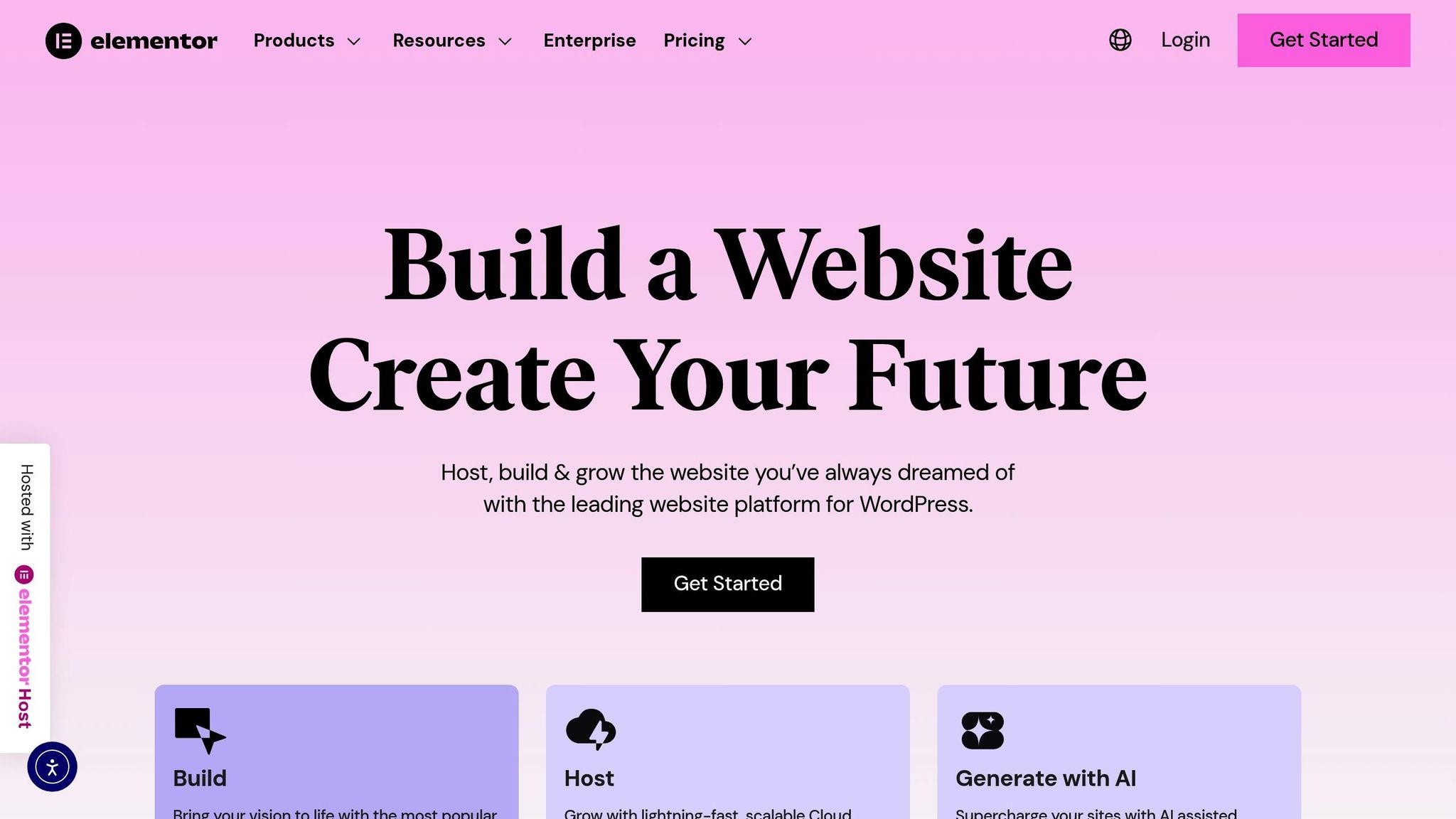
When it comes to creating polished layouts, Elementor and Gutenberg are standout tools. Both offer user-friendly, drag-and-drop interfaces that make it easy to design professional content with clear spacing, alignment, and section breaks. This helps guide readers naturally through your posts.
Elementor’s pre-designed templates and precise spacing controls ensure your blog maintains consistent margins and padding. Whether you’re creating column layouts for property comparisons or adding white space around headings, the tool makes it simple to achieve a clean, professional look. The live editor allows you to see exactly how your blog will appear before publishing, so you can catch any formatting issues early.
Gutenberg, with its block-based system, integrates seamlessly with WordPress. It’s great for creating alternating text and image sections – ideal for showcasing neighborhood features or explaining the home-buying process step by step. You can also insert headings, lists, and images with consistent styling, and both tools automatically ensure your designs are responsive across devices.
Use visual elements like section dividers, featured image blocks for property listings, and consistent call-to-action (CTA) buttons to create a polished, trustworthy appearance. These small details can significantly boost user engagement and encourage readers to explore your content further.
Improve Readability with Pull Quotes, Bullet Points, and Tables
Once your layout is in place, focus on formatting your content to make it more engaging and easy to read. Blogs with clear formatting and a strong visual hierarchy tend to see up to 30% higher engagement rates compared to those with dense, unstructured text. By breaking up your content, you can help readers find the information they’re looking for quickly.
- Pull quotes are perfect for drawing attention to key insights, client testimonials, or market stats. For instance, instead of burying a powerful statistic about local real estate trends within a paragraph, highlight it prominently as a pull quote. This makes it stand out and grabs attention.
- Bullet points are great for summarizing details like property features, neighborhood amenities, or step-by-step guides. For example, instead of writing, "The house includes a modern kitchen, three bedrooms, two bathrooms, and a spacious backyard", break it into bullets for easier scanning – especially on mobile devices.
- Tables are excellent for comparing data, such as school ratings, median home prices, or commute times across neighborhoods. A well-organized table with clear headers allows readers to quickly digest complex information. Keep tables simple and mobile-friendly to ensure they’re easy to read on smaller screens.
Ensure Mobile Responsiveness and Fast Loading
With Google’s mobile-first indexing, your blog’s mobile performance is now a top priority. In fact, over half of mobile users will leave a site if it takes more than three seconds to load. For real estate professionals, this means optimizing your blog for speed and usability is non-negotiable.
Start by testing your site with tools like Google’s Mobile-Friendly Test and PageSpeed Insights to identify potential issues. Common fixes include compressing images, using WebP formats, and enabling lazy loading to ensure high-quality photos don’t slow down your site. Since real estate blogs often feature multiple images, these optimizations are critical for maintaining fast load times.
Reliable hosting is another key factor. A slow server can undermine even the most well-designed mobile experience. Choose a hosting provider that prioritizes speed and uptime.
Make sure your site is easy to navigate on mobile. Use touch-friendly design elements, such as large, tappable buttons for your CTAs and easy-to-fill contact forms. Navigation menus should work well with finger taps, and important links like IDX search tools or automated home valuation features should be visually distinct and simple to access.
Consider adding a sticky sidebar with lead capture forms or property search widgets to keep conversion opportunities visible as users scroll. Just be careful not to clutter the screen – these elements should enhance the mobile experience, not distract from it.
Conclusion: Key Takeaways for Structuring Real Estate Blogs
Crafting effective real estate blog content means creating a structure that not only draws in readers but also turns them into leads. The strategies shared here work together to make your content appealing to both search engines and potential buyers or sellers.
Start by zeroing in on targeted keyword research. Focus on long-tail, hyperlocal keywords that signal higher intent and face less competition. Make sure these keywords are naturally placed in your H1 headline, opening paragraph, and subheadings – always prioritizing readability over stuffing in too many keywords.
A well-organized layout is key. Use clear headings, concise paragraphs, bullet points, and tables to keep readers engaged. Incorporate internal links to IDX pages, valuation tools, and clear CTAs, guiding readers toward taking actionable steps in their real estate journey.
Make your content stand out by showcasing local highlights like school districts, landmarks, and client testimonials. This hyperlocal focus not only builds trust but also helps you rank for neighborhood-specific searches with high intent and less competition.
Finally, don’t overlook mobile optimization. Ensure your blog loads quickly and looks polished on all devices by using tools like Elementor or Gutenberg. A smooth mobile experience can make all the difference in keeping readers on your page.
FAQs
How can I use hyperlocal keywords to boost my real estate blog’s SEO rankings?
If you want to climb the SEO rankings for your real estate blog, hyperlocal keywords are your secret weapon. These are terms that focus on very specific locations – think neighborhoods, cities, or even particular streets. For instance, phrases like “homes for sale in [City]” or “best schools in [Neighborhood]” can help you connect with people searching for something local and specific.
To make the most of these keywords, weave them naturally into your blog’s headers, meta descriptions, and throughout the body of your posts. Beyond just keywords, consider writing about topics that showcase your local expertise. Posts about community events, nearby attractions, or housing market trends in particular areas can do wonders. Not only will this help boost your search rankings, but it’ll also position you as a go-to resource for all things local.
How can I make sure my real estate blog is mobile-friendly and loads quickly?
To make your real estate blog more mobile-friendly and quick to load, start by checking its performance with tools like Google’s Mobile-Friendly Test. This will help you spot any problems that need fixing. Compress your image files to reduce their size and add descriptive alt text for better accessibility. Simplify your site’s code by minifying CSS, JavaScript, and HTML, which can significantly cut down load times. Enable browser caching to improve speed for returning visitors. Using a Content Delivery Network (CDN) can distribute your content more efficiently, and implementing Accelerated Mobile Pages (AMP) ensures a smoother experience for mobile users. Focus on a clean, responsive design so your blog works well on any device.
How can I use local expertise in my real estate blog to attract and engage clients?
To set your real estate blog apart and draw in local clients, emphasize your expertise in the community. Talk about well-known landmarks, popular local events, and highly regarded school districts to create a connection with readers. Add a personal touch by sharing stories or feedback from past clients about their experiences living in the area. To make your content even more engaging, consider including interactive tools like detailed maps or IDX-powered property search features. This strategy not only builds credibility but can also improve your blog’s visibility for localized search queries.


